Madhyamaheshwar Temple: Where the Himalayas Meet the Divine
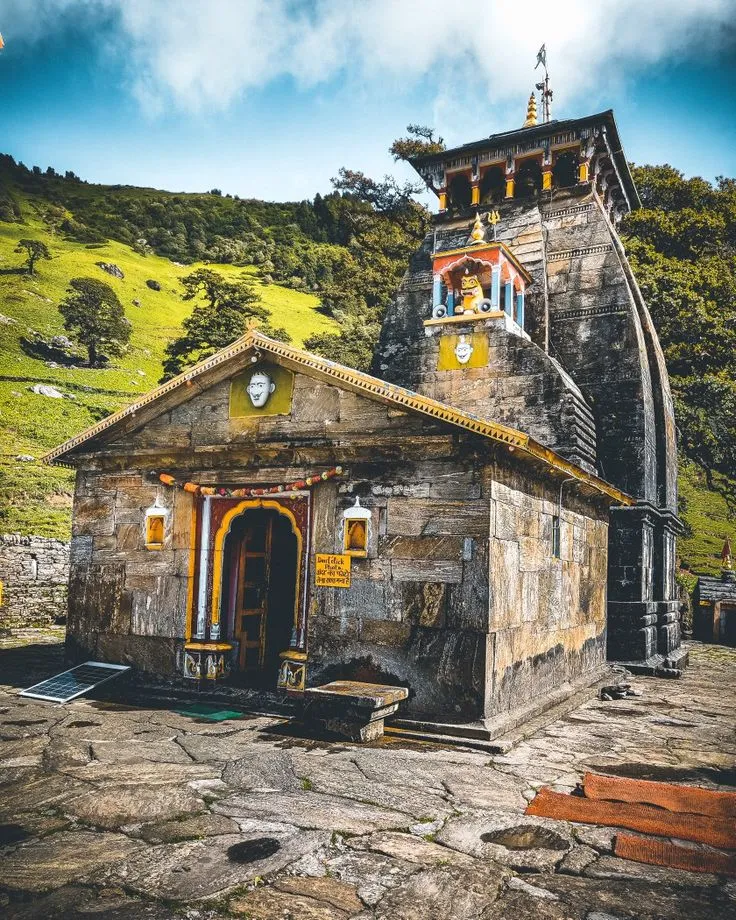
Madhyamaheshwar
A Journey Beyond the Ordinary
Some destinations are merely beautiful. Madhyamaheshwar is something else entirely — it is a place where the mountains whisper prayers, where meadows bloom at the feet of ancient gods, and where every step of the trail feels like an act of devotion. Tucked deep inside the Garhwal Himalayas of Uttarakhand, the Madhyamaheshwar Temple is not just a pilgrimage site — it is a full spiritual and sensory experience that leaves every visitor permanently changed.
Situated at an elevation of 3,497 metres (11,473 feet), Madhyamaheshwar is one of the five sacred shrines of the Panch Kedar pilgrimage circuit, comprising five Shiva temples spread across the Garhwal Himalayas. If you are a devotee of Lord Shiva, an adventure trekker, or simply a soul searching for something real and untouched — this destination has been waiting for you.
The Legend Behind Madhyamaheshwar
Every great temple carries a great story, and Madhyamaheshwar's mythology is as towering as the peaks that surround it.
After killing their cousins at the Kurukshetra War, the Pandavas began their journey to seek Lord Shiva's blessings and wash away their sins. But Lord Shiva, deeply aggrieved by the death and dishonesty of the war, wanted to avoid them. He disguised himself as a bull (Nandi) and disappeared into the ground, with different parts of his body appearing at various places across the region.
The middle (madhya) or belly — the navel (nabhi) — of Shiva is worshipped at this temple. This is how the shrine received its name: Madhya meaning middle, and Maheshwar meaning the Great Lord. Bhima, the second Pandava brother, is believed to have built this temple and worshipped Shiva here.
This story isn't just mythology — it is the living soul of Madhyamaheshwar. When you stand before the lingam inside that ancient stone sanctum, you feel the weight of centuries pressing gently against your chest.
The Temple: Architecture, Aarti & Spiritual Atmosphere
The main highlight of the trek, Madhyamaheshwar Temple, sits at an altitude of 3,497 metres. Dedicated to Lord Shiva, it is one of the five shrines of the Panch Kedar circuit. Built in classic North Indian architecture using stone, it reflects centuries of devotion. The backdrop of snow-clad Chaukhamba and Kedarnath peaks adds divine grandeur to the temple site.
The entire village gathers for the evening aarti performed at the temple, and guests are warmly greeted. One can feel the spiritual vibrations in the proximity of the temple. There is something about the sound of bells echoing off the Himalayan ridges at dusk that no photograph can ever capture. You simply have to be there.
To the right of the main temple, there is a small temple where a marble image of Saraswati is installed in the sanctum.
The temple follows centuries-old traditions. Lord Shiva's idol is moved to the Omkareshwar Temple in Ukhimath during winter, and the journey of the deity back to the mountains each summer is itself a festive, sacred procession that draws thousands of devotees.
The Trek: Through Forests, Rivers & Meadows
Starting Point: Ransi VillageYour journey begins at Ransi village, the starting point of the Madhyamaheshwar trek route. The nearest road-accessible village is Ransi, around 25 km from Ukhimath. Ransi is a charming Garhwali settlement where wooden homes line narrow lanes and the air already smells of pine and mountain cold. This is where the trek truly begins.
The Route: Step by Step
The total Madhyamaheshwar trek distance from Ransi to the temple is about 16–18 km one way. The route passes through serene Himalayan settlements and diverse terrain.
- Ransi to Gaundhar (6 km):A gentle trail through pine forests and small bridges across streams — ideal for acclimatisation.
- Gaundhar to Bantoli (3 km): The path becomes steeper, following the Madhyamaheshwar Ganga River. Bantoli is a scenic spot where two streams merge.
- Bantoli to Khatara (2.5 km): A moderate climb through forest patches and narrow trails.
- Khatara to Nanu & Madhyamaheshwar Temple (5–6 km): This stretch is the most beautiful — green meadows open up with breathtaking views of Chaukhamba, Neelkanth, and Kedarnath peaks.
Difficulty Level:
The Madhyamaheshwar trek is classified as an Easy-Moderate grade. From the base, you will gain approximately 5,930 feet in altitude over three days. There are no sections that are technically difficult, except the steep ascent from Lower Bantoli to Buda Madmaheshwar temple. This makes the trek accessible to fit beginners as well as seasoned trekkers.
The Crown Jewel: Buda Madhyamaheshwar & the Chaukhamba View
Situated west of the Madmaheshwar Temple, Buda Madmaheshwar requires an ascent ranging from gradual to steep, taking 1 to 2 hours to complete. The name 'Buda' comes from a small, older shrine next to a pond — it literally means 'old man' in Hindi, translating to Old Lord Shiva.
Once you reach the top, as the sun rises and the first light hits the mighty Chaukhamba Massif, the image is priceless.
From Buda Madhyamaheshwar, you can witness spectacular views of peaks including Kedarnath, Chaukhamba, Panchulli, Neelkanth, Kamet, and Trishul. Seeing this panorama at sunrise — with a small sacred pond reflecting the snow peaks like a mirror — is one of those rare travel moments that erases all exhaustion and fills you with pure, wordless gratitude.
Start at dawn, around 4:00 AM, for a spectacular sunrise from Buda Madmaheshwar. Carry a thermos of warm tea, wrap yourself in layers, and watch the Himalayas catch fire in the morning light. It will be the best alarm clock you have ever obeyed.
Wildlife & Nature: Inside Kedarnath Wildlife Sanctuary
The Madhyamaheshwar trek is situated inside the Kedarnath Wildlife Sanctuary in the northern Himalayas. The sanctuary is famous for the Himalayan Musk Deer, an endangered and protected species. It is also one of the largest biodiversity zones in India, with a wide variety of flora and fauna.
The trail winds through rhododendron forests blazing red in spring, dense groves of oak and deodar, and high-altitude bugyals (alpine meadows) carpeted in wildflowers. Birdwatchers will be delighted — the forests ring with calls of Himalayan species rarely spotted elsewhere. Every turn of the trail is a quiet reminder that nature here is still wild, still generous, still sacred.
Best Time to Visit Madhyamaheshwar
Madhyamaheshwar Temple is open only six months a year, usually from May to November. Here is a seasonal breakdown to help you plan:
- Summer (May – June): The most popular time for pilgrims and trekkers. Rhododendrons are in full bloom, the meadows are lush green, and the weather is warm and welcoming. Daytime temperatures range between 10°C and 20°C.
- Post-Monsoon (September – October): Clear skies, cool weather, and excellent trekking conditions with temperatures between 5°C and 15°C. The landscape is refreshed and vivid after the rains, and the mountain views are exceptionally clear.
- Monsoon (July – August): The region receives heavy rainfall. Trails can be slippery and landslide-prone. Not recommended for beginners.
- Winter (November – April): The temple remains closed and the region is covered in snow. Only experienced mountaineers venture here in this season.
How to Reach Madhyamaheshwar
- By Air: The nearest airport is Jolly Grant Airport, Dehradun, approximately 210 km away. From the airport, take a cab to Ransi via Rudraprayag.
- By Train: The nearest railway station is Rishikesh, about 190 km away, from where you can hire a taxi or take a bus to Ukhimath and then onward to Ransi.
- By Road: The temple is approximately 227 km from Rishikesh. The route passes through Devprayag, Rudraprayag, Ukhimath, and finally Ransi. The drive itself is spectacular — following the course of holy rivers through deep gorges and pine-covered valleys.
Where to Stay
Accommodation options are available at various points during the trek including Ransi, Gaundar, and Bantoli. These are basic but warm guesthouses run by local Garhwali families, where the food is simple, hot, and deeply comforting after a long day on the trail.
Since there is no accommodation at Madhyamaheshwar itself, trekkers and pilgrims set up tents near the temple and enjoy the natural beauty that envelops the hamlet. Camping under a star-filled Himalayan sky with the temple silhouetted against the peaks is an experience unlike anything in the world.
Essential Tips Before You Go
- Carry warm layers even in summer — temperatures drop sharply after sunset at high altitude.
- Carry enough water and energy snacks, as shops are limited after Bantoli. Consider hiring a local guide or porter for safety and better trail navigation.
- Acclimatise properly at Ransi before pushing ahead — altitude sickness is real.
- Carry a valid government photo ID — it is required at several checkpoints.
- Respect the sanctity of the temple: remove footwear, dress modestly, and maintain silence during prayers.
- The temple runs on Himalayan time — be patient, be present, and surrender to the pace of the mountains.
Q1. What is Madhyamaheshwar Temple famous for?
Madhyamaheshwar Temple is famous for being one of the five sacred Panch Kedar shrines dedicated to Lord Shiva. The middle or navel of Shiva is worshipped here in the form of a navel-shaped lingam, making it unique among all Shiva temples in India. It is also celebrated for its stunning Himalayan backdrop and proximity to Buda Madhyamaheshwar, which offers one of the finest mountain panoramas in the Garhwal Himalayas.
Q2. What is the altitude of Madhyamaheshwar Temple?
Madhyamaheshwar Temple is situated at an elevation of 3,497 metres (11,473 feet) above sea level, in the Rudraprayag district of Uttarakhand.
Q3. When does Madhyamaheshwar Temple open and close?
In 2026, the temple of Madhyamaheshwar will be opened for pilgrims on 21 May 2026. It generally remains open until November, after which it closes for winter due to heavy snowfall.
Q4. How long is the Madhyamaheshwar trek?
The Madhyamaheshwar trek covers around 32 kilometres in total, usually completed over three days. The one-way distance from Ransi to the temple is 16–18 km.
Q5. Is the Madhyamaheshwar trek suitable for beginners?
The trek is classified as Easy-Moderate. There are no sections that are technically difficult to traverse, except the steep ascent from Lower Bantoli to Buda Madmaheshwar temple. Beginners with reasonable fitness can complete it, especially with a local guide.
Q6. What is the significance of Buda Madhyamaheshwar?
Buda Madmaheshwar is home to a shrine older than Madhyamaheshwar itself — the term 'Buda' means 'old man', translating to Old Lord Shiva. Trekking 2 km further up from the main temple brings you to a small pond that captures the reflection of the Chaukhamba peaks — this is arguably the most iconic view of the entire trip.
Q7. What mountains can be seen from Madhyamaheshwar?
Madhyamaheshwar, you can witness spectacular views of peaks including Kedarnath, Chaukhamba, Panchulli, Neelkanth, Kamet, and Trishul.
Q8. How much does a Madhyamaheshwar trek package cost?
The cost of a Madhyamaheshwar trek package varies depending on the itinerary and services included. On average, it ranges between ₹10,000 to ₹20,000 per person, covering transport, accommodation, meals, and a guide.
Q9. What wildlife can be spotted on the Madhyamaheshwar trek?
The Kedarnath Wildlife Sanctuary is famous for the Himalayan Musk Deer, an endangered and protected species. The sanctuary is also one of the largest biodiversity zones in India, with many varieties of flora and fauna. Keen observers may also spot various Himalayan bird species, langurs, and, if very lucky, the snow leopard.
Q10. What is the Panch Kedar circuit, and what is Madhyamaheshwar's place in it?
Madhyamaheshwar is visited fourth in the Panch Kedar series, after Kedarnath, Tungnath, and Rudranath. The last temple visited in the circuit, after Madhyamaheshwar, is Kalpeshwar. Completing all five is considered one of the most profound pilgrimages a Shiva devotee can undertake
Why Madhyamaheshwar Stays With You
There are places you visit, and there are places that visit you — long after you have returned home, long after the dust has settled on your trekking boots. Madhyamaheshwar belongs firmly in the second category.
It is the temple bell ringing in thin mountain air. It is the way the Chaukhamba peaks glow pale gold before sunrise. It is the kindness of a Garhwali family who refills your chai without being asked. It is the absolute stillness of a high-altitude pond reflecting an entire mountain range in silence.
Whether you arrive as a pilgrim, a trekker, or simply a curious traveller, Madhyamaheshwar will give you something you didn't know you were looking for. And on the long road back down the mountain, you will already be planning your return.